Building date:
Original use:
Corner structures:
Mortar application and content:
Types and uses of stones:
Types and choice of windows:
Structures with similar masonry details:
Masons who worked on building:
Unique features:
Map views courtesy Google Maps. Address is Google Earth confirmed; 43°11'24.17"N 80°22'39.94"W.
City of Paris and Brant County Maps.
The Rev. William Morse, a missionary who served in India and Jamaica, became the first resident minister of St. James Anglican Church in 1839. In 1841 Morse purchased land from Hiram Capron, the founder of Paris, at what is today 3 Arnold St. and requested Boughton to build him a comfortable cobblestone house. He named it Ouse Lodge for a river in England which also was a previous name for the Grand River. Originally this was Morse's own home and not the manse to the church.
Morse was an accomplished musician and had a pipe organ in the dining room. He also had a price children's school at his home. He sold the house to William G. Curtis in 1876. With the exception of the foundation the house was stuccoed over in 1965.
Richard Palmer blog.
Cobblestones of Paris, by Paris Museum and Historical Society. Portion of pamphlet that applies to the Ouse Lodge.
- "Cobblestone Masonry", 1966, Carl Schmidt: Name reference, Ouse Lodge
- Page 226
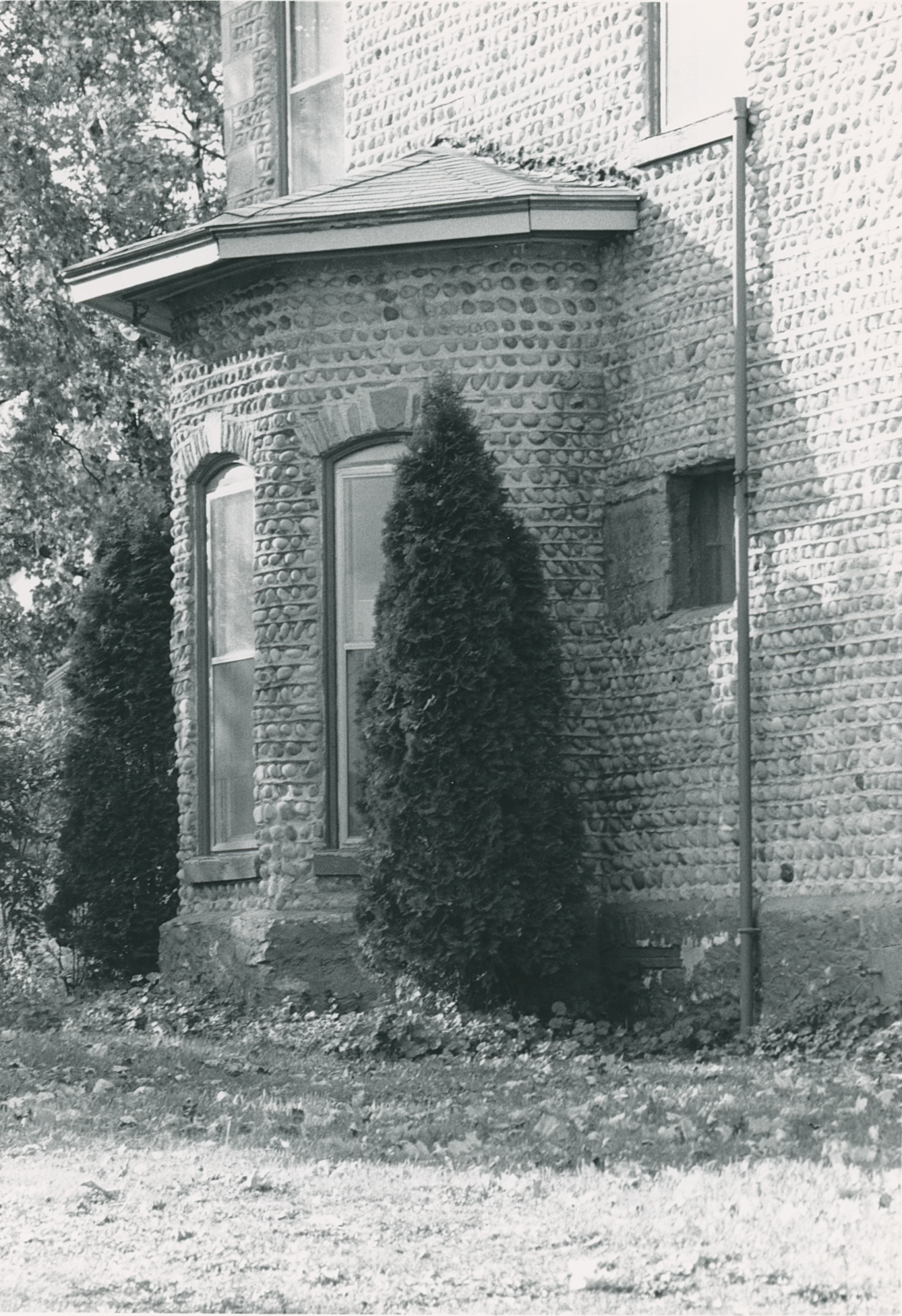 Bra-12 3 Arnold St 1.jpg ¹ |  Bra-12 3 Arnold St 2.jpg ¹ |  Bra-12 3 Arnold St 3.jpg ¹ |  Bra-12 3 Arnold St 4.jpg ¹ |
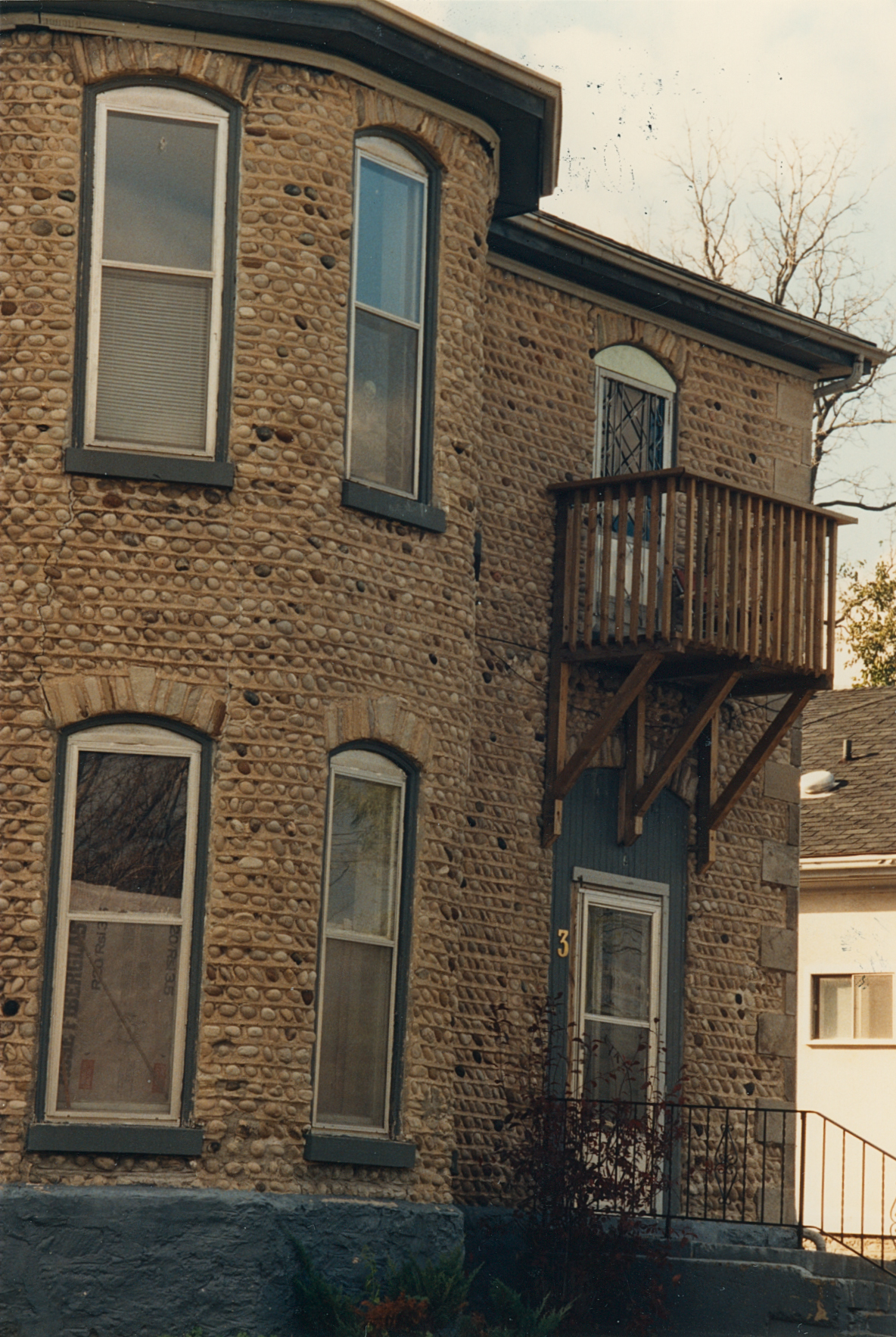 Bra-12 3 Arnold St 5.jpg ¹ |
¹ Photography courtesy Martin and Sheila Wolfish.
